Yorvipath: Managing Hypoparathyroidism with Ease Approved on August 9, 2024
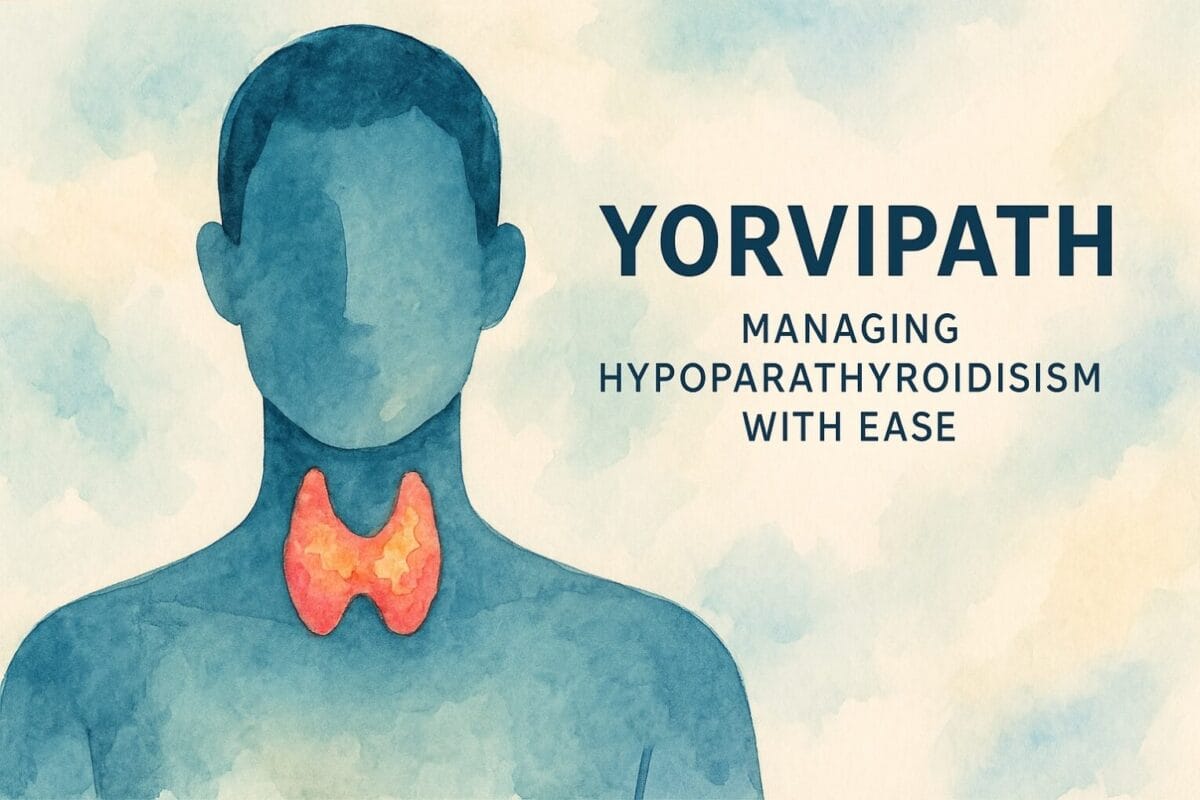
What is the name of the drug and what does it do?
Yorvipath (pronounced YOR-vih-path), generic name palopegteriparatide, is a medication used to treat adults with hypoparathyroidism, a condition where the parathyroid glands don’t produce enough parathyroid hormone (PTH). This hormone is essential for regulating calcium and phosphate levels in the body. Yorvipath helps maintain normal calcium levels in the blood by acting as a replacement for PTH.
How does it work?
Yorvipath is a parathyroid hormone analog, meaning it mimics the effects of natural PTH. It regulates calcium and phosphate levels by increasing calcium absorption in the intestines, promoting calcium reabsorption in the kidneys, and encouraging bone cells to release calcium into the bloodstream. This helps keep calcium levels in the normal range for people with hypoparathyroidism.
What did the research discover?
In clinical studies, Yorvipath was shown to be effective in helping adults with hypoparathyroidism maintain normal blood calcium levels without needing high doses of calcium or vitamin D supplements. In a 26-week study, 68.9% of participants taking Yorvipath met the treatment goals compared to only 4.8% of those taking a placebo. The study also showed that Yorvipath reduced the need for calcium and active vitamin D supplementation in most patients.
What are some of the side effects?
Common side effects of Yorvipath include:
- Injection site reactions (redness, swelling, or pain)
- Dizziness or lightheadedness when standing up
- Headache
- Diarrhea
- Back pain
- High calcium levels (hypercalcemia)
- Sore throat
Serious side effects may include very high calcium levels, very low calcium levels if the drug is stopped suddenly, and a potential increased risk of bone cancer (osteosarcoma). Patients should report symptoms like nausea, muscle weakness, or unusual pain to their doctor.
What are the dosage recommendations and how is it prescribed?
Yorvipath is given as a once-daily injection under the skin, usually in the abdomen or thigh. The starting dose is 18 micrograms per day, which can be adjusted based on calcium levels in the blood. The maximum dose is 30 micrograms per day. It’s important to inject Yorvipath at the same time each day and to rotate injection sites to avoid skin irritation. Patients should store the medication in the refrigerator before the first use and discard the pen after 14 days of opening.
Source:
U.S. Food and Drug Administration. Full prescribing information: [Label for NDA 216490]. Available from: https://www.accessdata.fda.gov/drugsatfda_docs/label/2024/216490s000lbl.pdf. Accessed 2024 Nov 20.